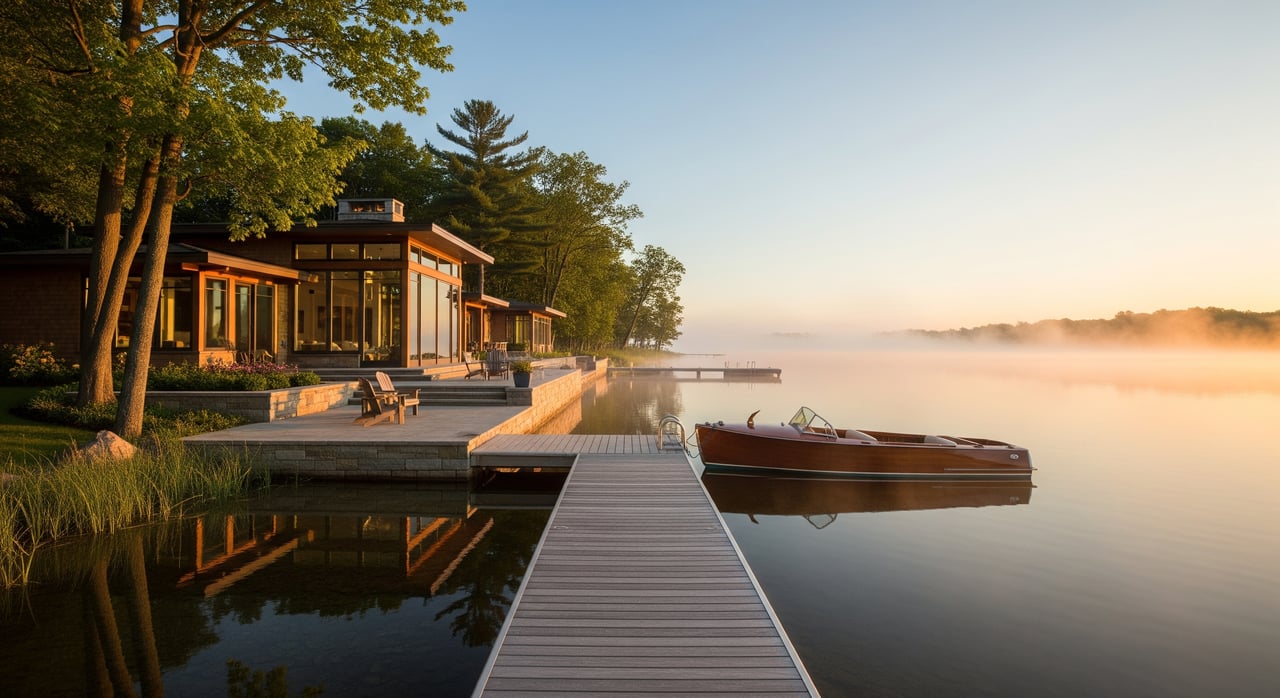
Are you torn between the power of Lake Michigan and the calm of a classic inland lake? You’re not alone. Buying waterfront in Elk Rapids is exciting, but each shoreline comes with different rules, risks, and rewards. In this guide, you’ll learn the key differences that affect daily life, maintenance, insurance, permitting, and resale so you can choose with confidence. Let’s dive in.
Your Elk Rapids waterfront options
Elk Rapids sits where the Elk River meets Grand Traverse Bay, giving you a few distinct choices in 49690:
- Lake Michigan frontage on Grand Traverse Bay with big-water dynamics and broad boating access.
- Elk River frontage with a riverine setting and direct connection to the bay.
- Inland lakes and lake chains nearby that vary in size, depth, clarity, and recreational use.
Each setting offers a different mix of exposure, access, and upkeep. Understanding those trade-offs will help focus your search.
Big water vs. inland water: key differences
Waves and wind exposure
- Lake Michigan shorelines experience larger waves and stronger wind-driven impacts. This affects dock design, anchoring, and the need for robust shoreline protection.
- Inland lakes typically have smaller fetch and calmer conditions on most days, though larger inland lakes still see wind and storm waves.
Water levels and hydrology
- Great Lakes water levels fluctuate seasonally and from year to year. High-water periods can influence erosion, beach size, and dock usability.
- Inland lakes often have more stable near-shore levels but can respond to watershed changes, dam influences, or altered inflows and outflows.
Ice and winter effects
- Inland lakes often freeze earlier and more solidly, which can reduce some winter wave action but increase freeze/thaw stress on docks and seawalls.
- Ice shove and heave can damage shoreline structures on both lake types, but design and maintenance strategies differ.
Water quality and aquatic plants
- Water clarity and nutrient levels vary by lake and by year. Some inland lakes are exceptionally clear and deep, while others are shallower and more biologically productive.
- Nearshore Great Lakes waters have different temperature patterns, currents, and sediment transport than inland lakes.
- Both settings are susceptible to invasive species such as zebra or quagga mussels and certain aquatic weeds. Management practices and local rules on boat cleaning and vegetation control vary by lake.
Lifestyle and recreation fit
Boating and navigation
- Lake Michigan frontage offers broad navigational access for larger boats and open-water cruising.
- Many inland lakes support pontooning, watersports, and fishing with calmer day-to-day conditions. Smaller lakes may be quieter, with more limited boat sizes and speeds.
Swimming and day-to-day use
- Calmer inland lakes can offer easier swimming on typical days, especially for paddle sports and casual dips.
- Lake Michigan’s big-water feel appeals if you love dramatic views and open-water boating. Plan for more variable daily conditions.
Privacy, traffic, and vibe
- Lake Michigan frontage may see seasonal boating activity and visitor traffic along the bay.
- Inland lakes range from lively, recreation-forward settings to very quiet, low-traffic shores. The character depends on lake size, public access, and local rules.
Permits, rights, and rules
Riparian rights basics
- In Michigan, owning waterfront usually conveys riparian access. The exact shoreline boundary, any easements, and public trust interests depend on the deed and parcel specifics.
- Confirm how far rights extend, what is shared, and whether the shoreline to the waterline is privately owned or subject to a municipal or littoral easement.
Docks and shoreline work
- Many projects involving docks, piers, seawalls, rip-rap, and shoreline stabilization require permits at the state and/or county level.
- Lake Michigan projects often face added scrutiny due to coastal protection standards, sand movement, dune protections, and potential wetlands considerations.
- Never assume you can add, change, or replace a dock or seawall without verifying permitting requirements.
Septic, wells, and setbacks
- Many waterfront homes rely on private wells and septic systems. County health departments regulate septic permitting, inspections, and repairs.
- Expect shoreline setbacks, vegetation protection rules, and lot coverage limits. Townships may enforce additional shoreland ordinances that affect building and landscaping.
Risk, insurance, and maintenance
Flood and erosion
- Lake Michigan shorelines can see storm surge, high waves, and episodic erosion. Inland lakes may have localized flooding or shoreline erosion, especially in low areas or where watershed inputs spike.
- Review FEMA flood maps to see if a property lies in a Special Flood Hazard Area. Elevation certificates help clarify flood insurance needs and risk.
Insurance considerations
- Standard homeowner policies may exclude or limit flood and certain wave or wind-driven damage. Flood insurance through the NFIP or private carriers may be required by lenders or prudent based on risk.
- Premiums for waterfront can be higher. Insurers may consider erosion exposure, elevation, wave run-up, and prior claims.
Shoreline structures and upkeep
- Docks, boathouses, seawalls, rip-rap, and vegetation management all require ongoing investment.
- Lake Michigan conditions typically demand more robust materials and more frequent maintenance than many inland lakes.
Septic and well care
- Waterfront properties often have older systems. Proximity to water increases the importance of regular pump-outs, inspections, and well water testing.
- Budget for potential upgrades to meet current codes and protect water quality.
Market realities in 49690
- Waterfront generally commands a premium over non-waterfront homes. The degree depends on frontage type, access, shoreline quality, and local supply.
- Lake Michigan frontage on Grand Traverse Bay often trades at higher premiums due to big-water views and broad boating access, balanced by higher exposure and maintenance.
- Inland lakes can also command strong prices when they offer exceptional clarity, depth, or recreation. Local reputation and scarcity matter.
- Recent local comps and on-the-water expertise are essential for accurate pricing and offers.
A focused due-diligence checklist
Use this checklist to move from “dream” to “decision.”
Documents and records
- Deed and survey confirming shoreline boundary and any easements.
- Title report noting riparian rights and restrictions.
- HOA or lake association bylaws, dues, and any special assessments.
- Permitting history for docks, seawalls, and shoreline stabilization.
Inspections and tests
- Shoreline/erosion assessment by a qualified professional, especially if issues are visible or if future work is planned.
- Septic inspection and permit compliance review, including maintenance records.
- Well inspection and water testing for bacteria and common contaminants.
- Structural check of dock, boathouse, and seawall conditions.
- Elevation certificate if in or near a flood zone.
Environmental and regulatory checks
- Lake association reports and state monitoring data for water quality and algal or nutrient trends.
- Invasive species history and any ongoing management obligations.
- Local permitting requirements for future dock or shoreline projects and the parcel’s existing permit history.
Practical on-site assessments
- Road access, winter plowing, parking, and boat launching approach.
- Bluff, dune, or bank stability; signs of erosion; presence of stabilizing vegetation.
- Prevailing wind and wave exposure at different times of day when possible.
Key questions for sellers and agents
- What shoreline boundary is recorded in the deed?
- Are there easements, rights-of-way, or shared-dock agreements?
- Has the shoreline required stabilization, dredging, or major repairs? Who paid?
- Any flooding incidents, insurance claims, or FEMA involvement?
- Is the property mapped in a flood zone? Is an elevation certificate available?
- What is the history of septic and well maintenance and permitting? Are systems up to current code?
- Who owns and maintains the docks and will they transfer with the sale?
- Are there HOA dues, special assessments, or lake-management fees?
How to choose your lake
- Start with lifestyle: big-water cruising and dramatic sunsets, or calmer paddles and relaxed swimming?
- Add the risk lens: Are you comfortable with higher exposure and potential erosion on the bay, or do you prefer typically steadier inland conditions?
- Consider long-term costs: Which shoreline structures and systems will you maintain or replace in the next 5 to 10 years?
- Fit your budget with current comps and a property-specific inspection plan.
Work with local experts
Your best decisions come from local, property-specific intelligence. Contact the appropriate state and local agencies for shoreline permits and water-quality records, county health departments for septic and well files, and township planning and zoning for shoreland setbacks and building rules. Review current sales through local MLS data and talk with a waterfront-savvy real estate team that can align the right parcel with your goals.
Ready to compare shortlists, request records, and coordinate specialized inspections? Reach out to the local team that lives and works on Northern Michigan water. Craig Real Estate can help you evaluate the trade-offs and move forward with clarity.
FAQs
Is Lake Michigan or an inland lake better for resale in Elk Rapids?
- There isn’t a universal winner; bay frontage often draws strong demand for big-water views and access, while certain inland lakes command premiums for clarity, depth, or recreation.
Do you need flood insurance for a lakefront home in 49690?
- If a home is in a FEMA Special Flood Hazard Area and the loan is federally backed, flood insurance is required; many owners buy flood coverage even when it isn’t mandated.
Can you build or modify a dock on Grand Traverse Bay?
- Possibly, but you should expect permits and reviews; coastal zones often have additional standards and some projects require multiple approvals.
How do waves and ice affect maintenance on different lakes?
- Lake Michigan’s larger waves and variable ice conditions often require more robust docks and shoreline protection; inland lakes generally see calmer forces but still need seasonal care.
What due diligence matters most before making an offer?
- Verify deeded shoreline rights, review septic and well records, assess flood status and elevation, inspect shoreline structures, and confirm local permitting rules.
How do public access and boating rules differ by lake type?
- Many inland lakes have specific public access points and local rules; Lake Michigan offers broader navigation, but both settings can have lake-specific regulations you must confirm.