Wondering what “deeded lake access” really means in Interlochen — and how it differs from shared or public access on Green Lake and Duck Lake? You are not alone. The words in a listing can shape your day-to-day use of the water and your long-term property value. In this guide, you will learn what each type of access actually includes, how to verify it in local records, and what to watch for before you buy or sell in the Interlochen area. Let’s dive in.
Deeded, shared, and public access explained
Deeded lake access
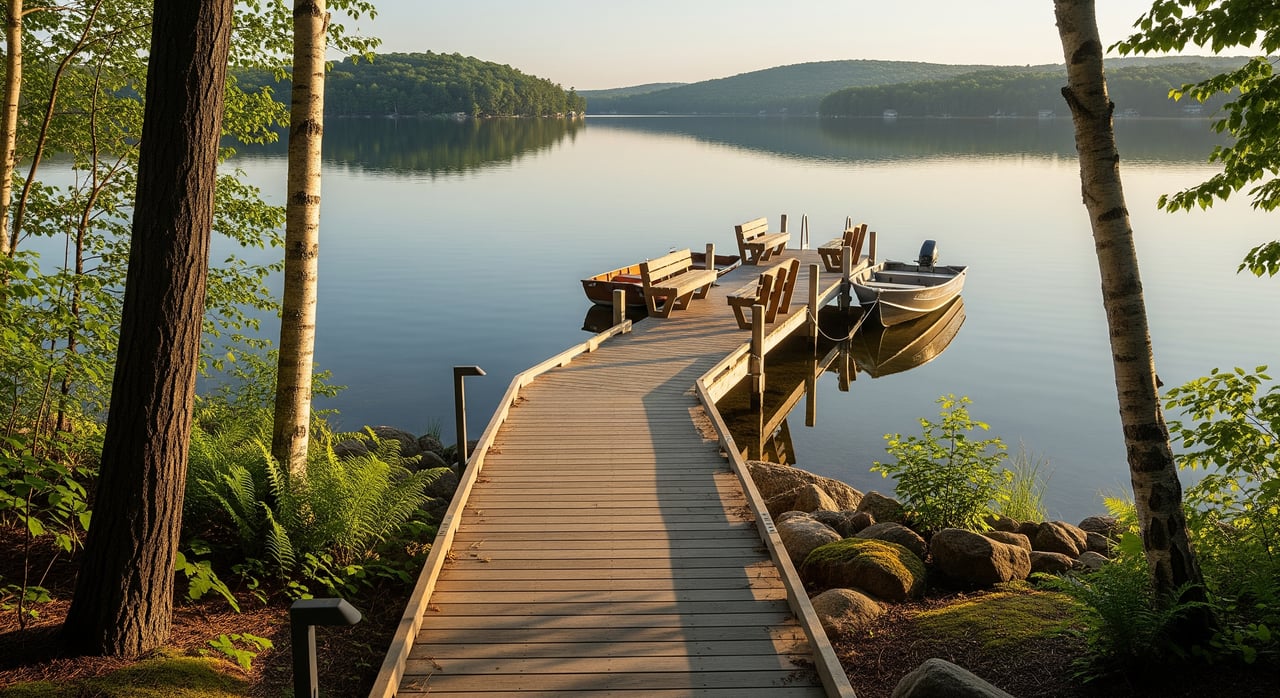
Deeded access is a recorded right tied to a specific property. It usually appears in a deed or separate easement document and can include a pathway to the water, a defined beach area, or even a dock slip. In some cases, your lot line may touch the water, which is fee-simple waterfront ownership.
What to expect:
- Rights are recorded and transfer with title to the property.
- Use can be exclusive or limited to named lots.
- Rules may cap hours, parking, or vessel types.
Key watch-outs:
- Ambiguous language about who can use the access and when.
- Narrow or steep paths that limit practical use.
- Unrecorded or informal rights that are hard to enforce.
Shared lake access
Shared access is private, but you share it with a defined group, such as a subdivision or condo association. Use is governed by recorded easements, HOA covenants, bylaws, or a plat dedication.
What to expect:
- Rules for use and guest policies live in association documents.
- Costs for docks, pathways, and shoreline maintenance are shared.
- Scheduling or reservation systems may apply to slips or lifts.
Key watch-outs:
- Disputes over parking, use, or maintenance.
- Special assessments for repairs or improvements.
- Reduced enjoyment if rules are unclear or enforcement is inconsistent.
Public access
Public access is open to everyone. In Interlochen, that often means state or county-managed sites, community parks, or public road-ends leading to the water. Interlochen State Park on Green Lake is a well-known local example of state-managed public shoreline and a boat launch nearby.
What to expect:
- Public rules, hours, and possible fees.
- Seasonal crowds, especially July and August.
- No exclusive use for nearby property owners.
Key watch-outs:
- Limited parking or seasonal closures.
- Heavier boat traffic at peak times.
What this means around Interlochen’s lakes
Green Lake and Duck Lake define daily life in Interlochen. Interlochen State Park sits on Green Lake, and the Interlochen Center for the Arts is between the two lakes, which shapes local traffic and seasonal patterns. Public sites often see their busiest days in midsummer. If you value quiet or certainty about docking, deeded waterfront or clearly defined deeded access can be the most predictable option.
Interlochen lies near county lines, so records may exist in different places. If a property sits near a boundary, you may need to check both Grand Traverse County and Benzie County records to confirm access.
How to verify your access rights
Start with recorded documents
Ask for and review:
- The recorded deed for the property.
- A title commitment or title report that lists all recorded easements and covenants.
- Any recorded easement instruments granting access.
- The plat map and restrictive covenants for a platted subdivision.
- A recent certified survey that shows lot lines and the access path.
- Association documents if shared access applies, including bylaws, budgets, and meeting minutes.
- Any dock, mooring, or shoreline permits or licenses.
Read the details that matter
Focus on:
- Scope. Does the language allow only ingress and egress, or does it also allow a dock, storage, or parking?
- Exclusivity. Is the access limited to certain lots or owners?
- Maintenance and costs. Who pays and how are assessments set and enforced?
- Term. Is the easement permanent and recorded, or revocable under certain conditions?
- Width and location. A 10 to 20 foot path is very different from a broad, shared beach.
Where to check records locally
- County Register or Recorder of Deeds for recorded deeds, plats, easements, and covenants. Check Grand Traverse County and adjacent Benzie County if the property is near a boundary.
- County GIS parcel maps to visualize easements, parcels, and any public road-ends.
- Township planning or zoning offices for shoreline setbacks and improvement rules.
- Michigan Department of Natural Resources for public access site listings and boating rules.
- Michigan EGLE for shoreline work permits and environmental regulations.
Practical implications for buyers
- Value. Direct, fee-simple waterfront typically commands the highest premium. Deeded access to a private common area is valuable, but usually less than full waterfront. Homes with access only, and no shore ownership, often sell at a discount relative to waterfront lots.
- Certainty. Verify that the access right is recorded and transferable. Title insurance should specifically insure your access rights.
- Costs. Ask for association budgets, reserve studies if available, and minutes that mention docks, paths, seawalls, or assessments.
- Rules. Understand hours, parking limits, guest policies, vessel restrictions, and no-wake zones.
- Improvements. Dock installations, shoreline hardening, or dredging may require township or county approvals and state review by EGLE. Check whether permits exist and what future projects would require.
- Boating practices. Follow Michigan’s clean, drain, dry guidance for boats to protect the lakes from aquatic invasive species.
Practical tips for sellers
- Be ready with documents. Provide copies of access-related deeds, easements, HOA documents, budgets, meeting minutes, and any special assessment notices.
- Disclose maintenance and condition. Note the history of dock, path, or shoreline repairs, who paid for them, and whether any work is pending.
- Clarify the nature of rights. Make clear whether access is appurtenant to the property, limited to a person or different lot, or part of a shared common area.
- Address questions up front. Buyers will ask who can use the access, where they can park, and whether a dock or slip is included.
Site visit checklist for any access
Walk the site in different conditions and look for:
- The slope, surface, and actual usability of the access path.
- Parking capacity and any signage or restrictions.
- The presence and condition of docks, lifts, and shoreline protection.
- Evidence of erosion, vegetation overgrowth, or encroachments.
- Practical access for kayaks, paddleboards, or trailered boats.
Common pitfalls in access deals
- Assuming access based on informal or historical use. Only recorded rights provide reliable protection.
- Overlooking the difference between ingress and egress versus full recreational use. If the document is silent on docks or parking, you may not have that right.
- Ignoring narrow or poorly located paths. A recorded 10 foot strip down a steep bank may be legal but hard to enjoy.
- Missing multi-county records. Interlochen’s proximity to county lines means you may need to check more than one recorder’s office.
- Underestimating shared costs. Budget for dock replacement, shoreline repairs, and path maintenance if you share access.
Step-by-step due-diligence checklist
Use this simple sequence to confirm lake access for any Interlochen property:
- Gather documents from the seller or listing agent
- Recorded deed for the current owner.
- Title commitment listing all recorded easements and exceptions.
- Stamped survey showing boundaries and any access path.
- HOA or association covenants, bylaws, budgets, and meeting minutes for the last two to three years.
- Dock, mooring, seawall, or shoreline permits and approvals.
- Maintenance records and invoices for shared access improvements.
- Verify with public sources
- Search the County Register or Recorder of Deeds for easements and plats. If near a jurisdiction boundary, review both Grand Traverse County and Benzie County.
- Check County GIS maps for public road-ends and parcel relationships.
- Contact the township zoning or planning office for setbacks and rules.
- Review Michigan DNR resources for public access sites and boating regulations.
- Review Michigan EGLE guidance for shoreline work permits and environmental restrictions.
- Inspect on site
- Walk the access path in wet and dry conditions.
- Count parking spaces and review signage.
- Photograph docks, lifts, and shoreline structures and note their condition.
- Speak with adjacent owners or association board members about actual use, rules, and maintenance practices.
- Protect yourself with legal and insurance steps
- Obtain title insurance that insures access rights.
- If language is unclear or contested, consult a real estate attorney.
- Confirm liability insurance coverage for shared access with the responsible association or owner.
Interlochen scenarios: how each access type feels in daily life
- Deeded waterfront on Green Lake. You enjoy immediate water access and the most control over your dock use, subject to local and state rules. Expect the highest purchase price and direct responsibility for shoreline upkeep.
- Deeded access to a private common area on Duck Lake. You have a defined pathway and possibly a shared dock. Costs are shared, rules apply, and you will want to understand parking and guest policies for peak weekends.
- Home near public access by Interlochen State Park. You benefit from convenient launches and beaches but should plan for busier summer days and limited parking for guests. Your property value reflects proximity to recreation without exclusive rights.
The bottom line for Interlochen buyers and sellers
Access language is powerful. A few recorded lines can shape your weekends, your carrying costs, and your eventual resale value on Green Lake or Duck Lake. If you confirm the documents, understand the rules, and inspect the practical realities on site, you can buy or sell with confidence.
Ready to talk through your options and review documents together? Reach out to Craig Real Estate to schedule your free consultation with a local team that understands Interlochen’s lakes and how access impacts your lifestyle and investment.
FAQs
What does “deeded lake access” mean in Interlochen?
- It is a recorded right tied to a property that may include a path, beach area, or dock use, with terms defined in the deed or a recorded easement.
How is shared access different from deeded waterfront?
- Shared access is private but used by a defined group under HOA rules and cost sharing, while deeded waterfront typically provides the most direct, exclusive control of shore and dock use.
How can I verify lake access rights before buying?
- Review the deed, title commitment, recorded easements, plat, survey, and any HOA documents, then confirm records at the county offices and inspect the access on site.
Do I automatically have the right to build a dock?
- Not automatically. Dock or shoreline work often requires township or county approvals and state review by EGLE, plus any HOA or easement restrictions.
Can lake access be lost or revoked?
- It can be at risk if not properly recorded, if abandoned, or if vacated by legal action. Recorded instruments and title insurance reduce this risk.
Who is liable for injuries on a shared access path?
- Liability generally follows the party responsible for ownership and maintenance, often an association or private owner identified in recorded documents. Confirm that insurance coverage exists.