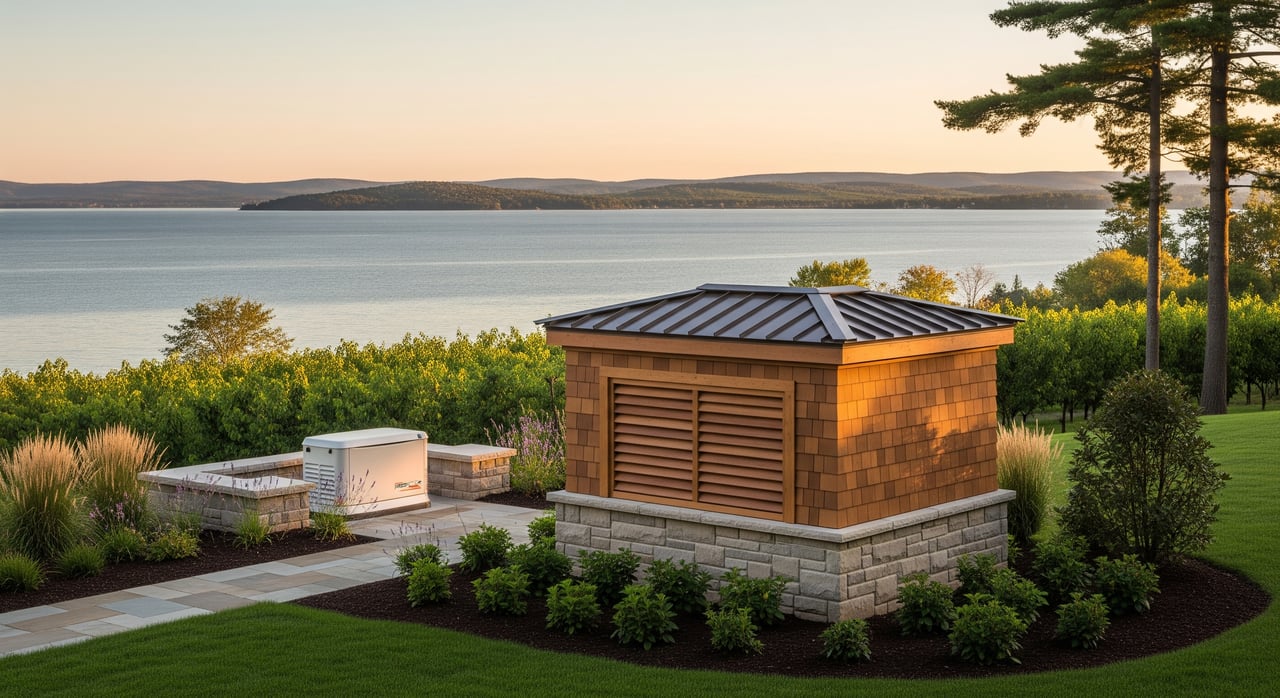
Winter wind, summer storms, or a surprise outage should not put your life on hold. If you live in Grand Traverse County, a whole-home generator can keep heat, water, refrigeration, and Wi‑Fi running when the grid goes down. In this guide, you will learn how standby systems work, what local permits and utility steps you need, typical costs and fuel choices, safety musts, and how an installation can influence resale. Let’s dive in.
Whole‑home backup, in plain English
Standby vs portable vs batteries
A standby generator is a permanently installed unit that turns on automatically when utility power fails and routes electricity through a transfer switch. Portable generators are lower cost but require manual setup and do not usually power an entire home. Battery backup systems are quiet and clean, but full home coverage often requires large battery arrays and utility‑approved interconnection.
Right‑size your system
Sizing depends on the loads you want to run, like HVAC, well or sump pumps, water heating, and kitchen appliances. Many full‑home systems fall in the 16 to 26 kW range, while larger homes may need 30 kW or more. A licensed electrician should perform a load calculation and confirm panel capacity before you buy.
What Grand Traverse County requires
Permits and inspections
Permits are required in Grand Traverse County for permanent standby generators, including the electrical and fuel work. The county outlines steps in its Building Permit Process, and most projects go through plan review and inspections. You can apply and schedule inspections through the county’s EPIC‑GT system. Review the county’s process at the Grand Traverse County Building Permit Process.
Electrical code in Michigan
Michigan enforces the Michigan Electrical Code, which adopts the National Electrical Code with state amendments. Installations serving homes must follow the NEC sections for emergency and standby systems and meet local authority requirements. See the state’s adoption overview in the Michigan Electrical Code rules summary.
Coordinate with your utility
If you are in Consumers Energy territory or inside Traverse City with municipal service, contact your utility early about generator plans. Any generator that could operate in parallel with the grid, even briefly, may require an interconnection review and approved protective equipment. Learn about utility procedures at Consumers Energy generator interconnection and the state’s overview of interconnection basics.
Fuel options that work here
Natural gas convenience
Where service is available, natural gas offers continuous supply without on‑site refueling, which is popular for standby systems. Confirm service at your address with your utility. For regional context on distribution, see Consumers Energy natural gas operations.
Propane for off‑gas homes
Propane is common for rural and seasonal properties. Plan for tank size, placement, and reliable winter delivery access, and use licensed pros for tanks and lines. Michigan outlines permitting and safety for LPG systems here: LPG systems permits and licenses.
Diesel for special cases
Diesel units are more typical in larger or commercial applications and require secure on‑site fuel storage. For most homes in Grand Traverse County, natural gas or propane is the practical choice.
What it costs and how to budget
Industry surveys put most whole‑home standby installations in the range of roughly 5,000 to 20,000 dollars or more, depending on size, fuel, and site conditions. Review typical price drivers in the HomeAdvisor generator installation guide. Your final cost depends on things like pad and trenching needs, gas or propane line length, transfer switch type, panel upgrades, and permit fees. Ask local installers for written quotes that include permitting and inspections.
Safety you cannot skip
Carbon monoxide is deadly. Never run a generator indoors and keep exhaust well away from windows, doors, and vents. Place working CO alarms on each level of your home. Read federal guidance on safe use in the CPSC generator safety guide.
Electrical safety matters too. A listed transfer switch must isolate your home from the utility to prevent backfeeding, and all wiring should be completed by a licensed electrician and inspected. Keep your one‑line diagram, permits, and inspection approvals on file for service, insurance, and resale.
Insurance and resale benefits
Policies vary, but some insurers offer modest premium credits for automatic standby generators. At a minimum, notify your carrier, provide installation and inspection documents, and ask whether the generator is covered. For examples of how home improvements can affect premiums, see Consumer Reports’ take on insurance and home upgrades.
Standby power can also help marketability, especially in outage‑prone or rural areas. Industry sources often cite potential value bumps in the low single digits when systems are permitted, inspected, and well documented. For context on value conversations, see this overview of generators and home value.
Quick checklists for locals
Planning an install in Grand Traverse County
- Identify your utility and ask about interconnection or written approval for any system that could parallel the grid.
- Confirm fuel: natural gas availability or quotes from propane suppliers, including winter access policies.
- Have a licensed electrician perform a load calculation and size the generator and transfer switch.
- Apply for county permits and schedule required inspections. Clarify who submits paperwork.
- Place CO detectors and set a maintenance plan. Keep manuals, one‑line diagram, and service records.
Buyers evaluating a home with a generator
- Ask for permits, inspection approvals, and the installer’s info.
- Confirm generator model, kW, age, and fuel type, plus transfer switch model.
- Review service records and any utility interconnection documents.
- Test run the system with the seller’s permission and verify CO alarms.
Sellers preparing to list with a generator
- Gather permits, inspections, one‑line diagrams, utility approvals, and service contracts.
- Note age, model, fuel, and any warranty information in your property file.
- Clear snow or debris around the unit before showings and replace CO alarm batteries.
- Highlight practical benefits for rural, lakefront, or well‑and‑pump properties in your listing remarks.
When you are deciding whether a standby system fits your home or how to present one to buyers, local context matters. If you want help weighing how a generator could impact your purchase or sale in Grand Traverse County, reach out to Craig Real Estate for friendly, local guidance.
FAQs
How does a whole‑home generator work during a Grand Traverse outage?
- A standby unit senses an outage, starts automatically, and an automatic transfer switch safely moves your home from utility power to generator power until the grid returns.
Do I need a permit for a standby generator in Grand Traverse County?
- Yes, permanent installs typically require electrical and mechanical or fuel permits, a plan review, and inspections by the county before final approval.
Which fuel is best for generators in Northern Michigan homes?
- Use natural gas where service exists for convenience, or propane in off‑gas areas with an on‑site tank and reliable winter delivery access.
How much does a whole‑house generator cost to install?
- Many projects fall between about 5,000 and 20,000 dollars or more, depending on system size, fuel, site work, and permitting.
Is a transfer switch required for home generator setups in Michigan?
- Yes, a listed transfer switch is essential to isolate your home from the grid for safety and code compliance.
Can a generator add value when selling my Traverse City home?
- It can improve marketability and may add modest value, especially in outage‑prone or rural areas, when properly permitted and documented.
What safety rules apply to generator exhaust and CO in homes?
- Run generators outdoors, far from openings, and install working carbon monoxide alarms on each level to protect occupants.