Buying acreage in Antrim County can feel simple at first glance. You find a beautiful parcel, picture the home or getaway you want to build, and assume the rest will fall into place. But with vacant land, the details matter, and a few early checks can make the difference between a smooth purchase and an expensive surprise. This guide walks you through the biggest items to verify before you buy so you can move forward with more confidence. Let’s dive in.
Start With County Records
Acreage purchases in Antrim County often involve several offices, not just one. The county provides access to departments for Planning & Zoning, GIS, Construction Code, Register of Deeds, Road Commission, and Soil Erosion, and the State of Michigan recognizes Antrim County’s tax parcel website as an official parcel resource. You can start with the county’s property tax information page to understand where tax responsibilities may fall.
It also helps to know that current-year tax bills are handled by the local municipality, while the county treasurer handles prior-year and delinquent balances. That means you should confirm both the parcel details and any tax status before you remove contingencies. For land buyers, this is one of the easiest ways to avoid surprises later.
Match the Parcel to the Legal Description
Before you get too far into due diligence, compare the parcel shown on the county map with the deed and legal description. The county GIS and tax parcel tools are a strong starting point for confirming that the acreage you think you are buying matches the legal record. Michigan also points buyers to official tax parcel resources for this purpose.
This step matters because vacant land can look straightforward on paper while still raising boundary or description questions. If anything seems unclear, or if corner markers are uncertain, it is wise to involve a Michigan-licensed professional surveyor early in the process. That is especially important if you are thinking about dividing the property in the future.
Confirm Access Before Anything Else
One of the biggest acreage mistakes is assuming a parcel is usable just because it is for sale. In reality, legal ingress and egress, driveway access, and recorded easements can determine whether the land works for your plans at all. Michigan’s Land Division Act is designed in part to promote proper access, accurate legal descriptions, and land suitable for building sites.
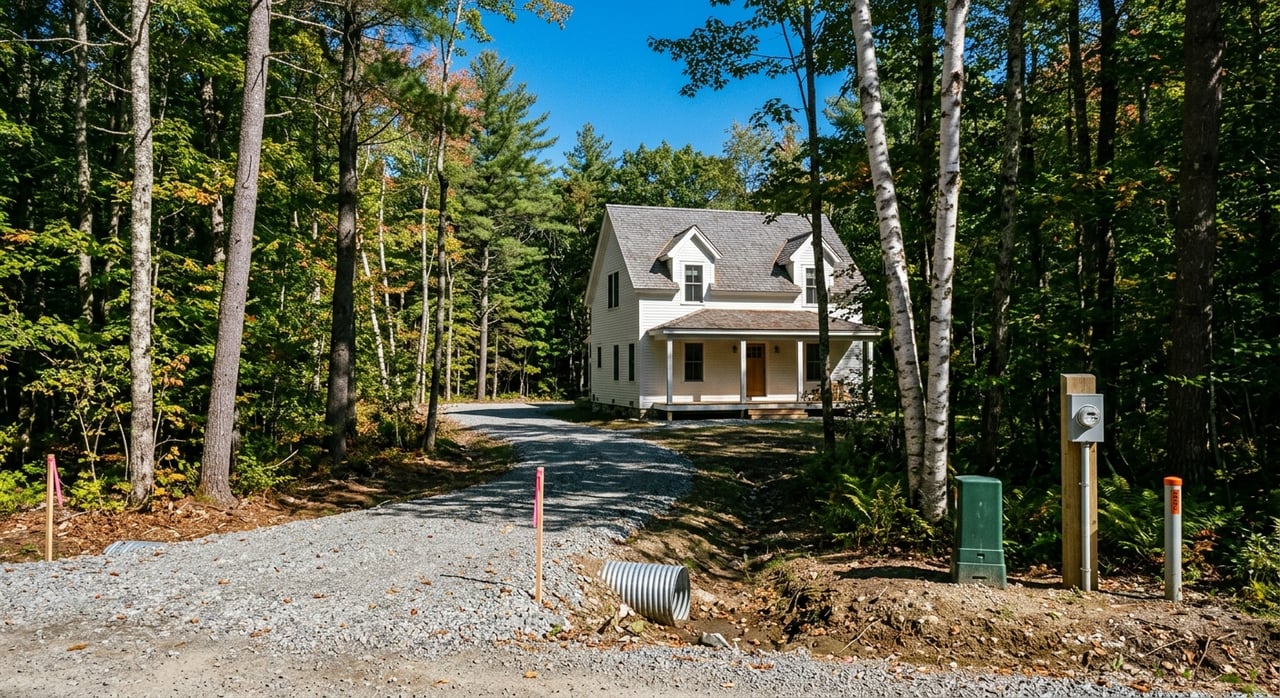
If the parcel fronts a county road, or if you need a new driveway, the Antrim County Road Commission permit process should be part of your review. The Road Commission requires a permit for county road right-of-way uses other than travel, including new drives and driveway reconstruction. In practical terms, access is not something to check later. It should be one of your first calls.
Why Road Access Matters
Even a great-looking parcel can become harder to use if access is limited or if driveway approval is complicated. A long private approach, a shared access point, or road frontage issues can affect cost, timing, and what you can build. These are not small details when you are buying acreage.
If access is a priority for your purchase, ask questions early about easements, road frontage, and driveway approvals. That upfront work can save you time, money, and stress during the transaction.
Check Well and Septic Feasibility
In rural Antrim County, the biggest utility question is often not power or internet. It is whether the parcel can support a private well and septic system. According to the Health Department of Northwest Michigan, a residential site evaluation is the first step for vacant property that does not have municipal sewer.
The county’s property-buying guidance also recommends deciding early whether the parcel has municipal water and sewer or whether you will need a new well and septic system. HDNW can provide historic well records and septic permit information for the property you are evaluating. That makes this one of the most important due diligence steps for vacant land buyers.
What a Site Evaluation May Require
For a site evaluation, the owner must submit a site plan showing:
- Property lines
- Buildings
- Wells
- Septic or drainfield locations
- Roads
- Bodies of water
- Utility locations
- Test holes
- A copy of the property survey
In some cases, difficult soil conditions may require backhoe excavations at the owner’s expense. HDNW also notes that utility marking through Miss Dig can add time to the process, and new wells require bacteriological and partial chemical sampling.
Plan for Timing
These reviews can take weeks, not days. That is why it is smart to order the right evaluation before removing contingencies and to build enough time into your closing schedule. If you are buying acreage with plans to build right away, timing matters just as much as the result.
Know Which Evaluation Fits the Property
The right health department review depends on what you are buying and how you plan to use it. If you are buying vacant land or planning a demo and rebuild, ask for a site evaluation. If you are buying an existing home or cabin, the Antrim Property Guide says you should ask for an Existing System Real Estate Evaluation.
If you are considering short-term rental use, ask whether a Short-Term Rental Real Estate Evaluation applies. The same guide also notes that if septic pumping cannot be documented within five years, the tank should be pumped before the evaluation. These details are easy to miss, but they can affect both your timeline and your next steps after closing.
It is also worth knowing that time-of-transfer evaluations are currently required only in Milton Township, Torch Lake Township, the Village of Elk Rapids, and Elk Rapids Township. If your parcel is in one of those jurisdictions, make sure that requirement is part of your due diligence checklist.
Understand Soil Erosion Rules
If your plans include clearing, grading, or other earthwork, do not assume you can start immediately after closing. In Antrim County, soil erosion rules are triggered when work is within 500 feet of a water body or disturbs more than 1 acre. The local conservation district also notes that review may involve wetlands, high-risk erosion areas, and critical dunes.
This is especially important for waterfront-adjacent or sloped parcels, where the land may look ready for improvements but require added review. If you may disturb the site, it is smart to check these requirements early so you can budget for both time and planning.
Think Ahead About Building and Dividing
If you hope to build soon, plan for more than just one permit. The county building permit application requires plan review, and separate plumbing, mechanical, and electrical permits are needed for related trades. That means a buildable parcel still comes with a process, and understanding that process early can help you set realistic expectations.
If you are considering splitting acreage, survey work becomes even more important. Michigan law requires a certified true copy of a survey map to be recorded in some parcel division situations. A surveyor can help you understand whether the land layout supports your future plans.
Use a Practical Due Diligence Checklist
When you buy acreage in Antrim County, it helps to review the property in a clear order. In many cases, the most workable sequence is access first, then septic and well feasibility, then boundary and title records, and finally any building or soil-disturbance permits.
Here is a simple checklist to keep handy:
- Pull the parcel on the county GIS or tax parcel site and compare it with the deed and legal description
- Confirm road access, driveway permits, and county road right-of-way questions with the Road Commission
- Order the relevant health department evaluation before removing contingencies
- Check septic pumping history and available water test results
- Confirm whether the parcel is in a jurisdiction where a transfer evaluation currently applies
- If you may build, clear land, or split the parcel, check zoning, building, survey, and soil erosion requirements early
Why Local Guidance Matters
Acreage can offer privacy, flexibility, and room to create exactly what you want. It can also come with more moving parts than a typical in-town home purchase. The key is knowing which questions to ask before you commit.
When you have the right local guidance, it becomes much easier to spot potential issues early and keep your purchase aligned with your goals. If you are exploring land, vacant lots, or lifestyle property in Northern Michigan, Craig Real Estate would be glad to help you navigate the process with clear, local insight.
FAQs
What should you check first before buying acreage in Antrim County?
- Start by confirming legal access, driveway feasibility, and recorded easements, then move into septic and well feasibility, parcel records, and permit-related questions.
Does vacant land in Antrim County need a septic evaluation?
- If the parcel does not have municipal sewer, the Health Department of Northwest Michigan says a residential site evaluation is the first step for vacant property.
Are driveway permits required for acreage in Antrim County?
- Yes, if the parcel fronts a county road and you need a new driveway or driveway reconstruction, the Antrim County Road Commission requires a permit for county road right-of-way use.
How do you verify property boundaries for acreage in Antrim County?
- You can start by comparing county GIS or tax parcel mapping with the deed and legal description, and if anything is unclear, a Michigan-licensed professional surveyor is the best next step.
When do soil erosion rules apply to land in Antrim County?
- Soil erosion review is triggered when earthwork is within 500 feet of a water body or when more than 1 acre is disturbed.
Are transfer septic evaluations required everywhere in Antrim County?
- No, according to the county information provided, time-of-transfer evaluations currently apply only in Milton Township, Torch Lake Township, the Village of Elk Rapids, and Elk Rapids Township.