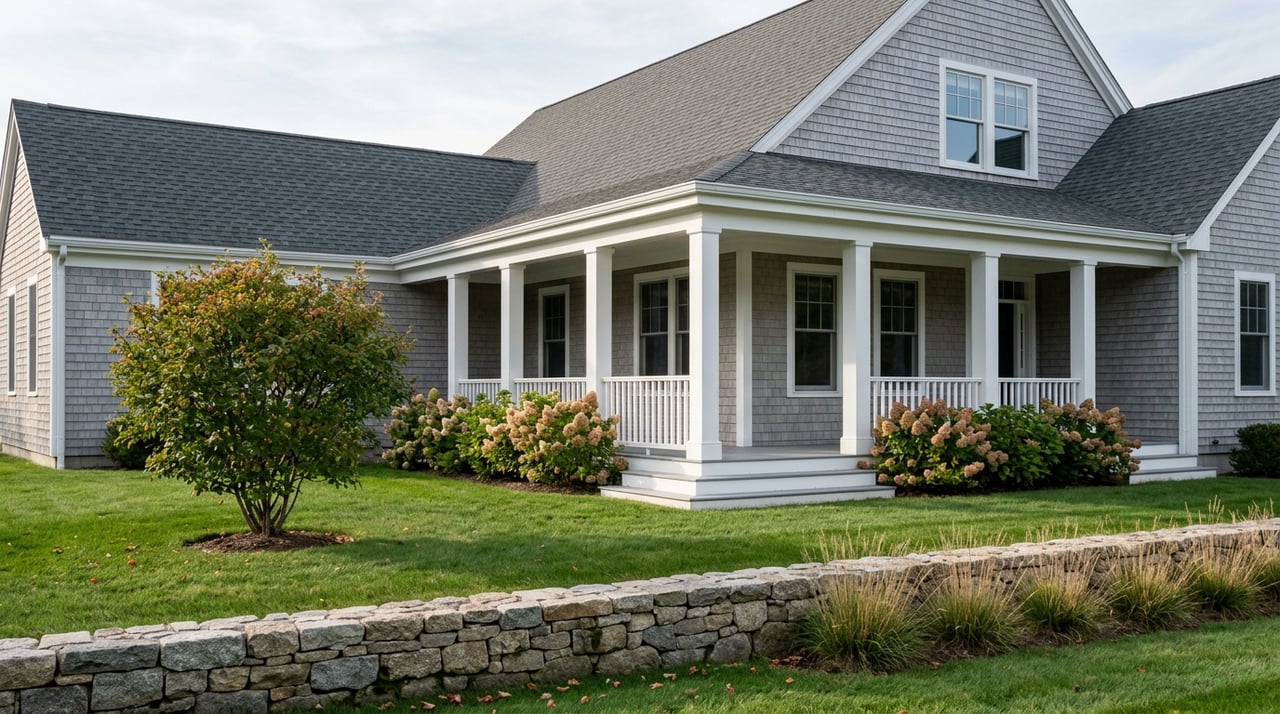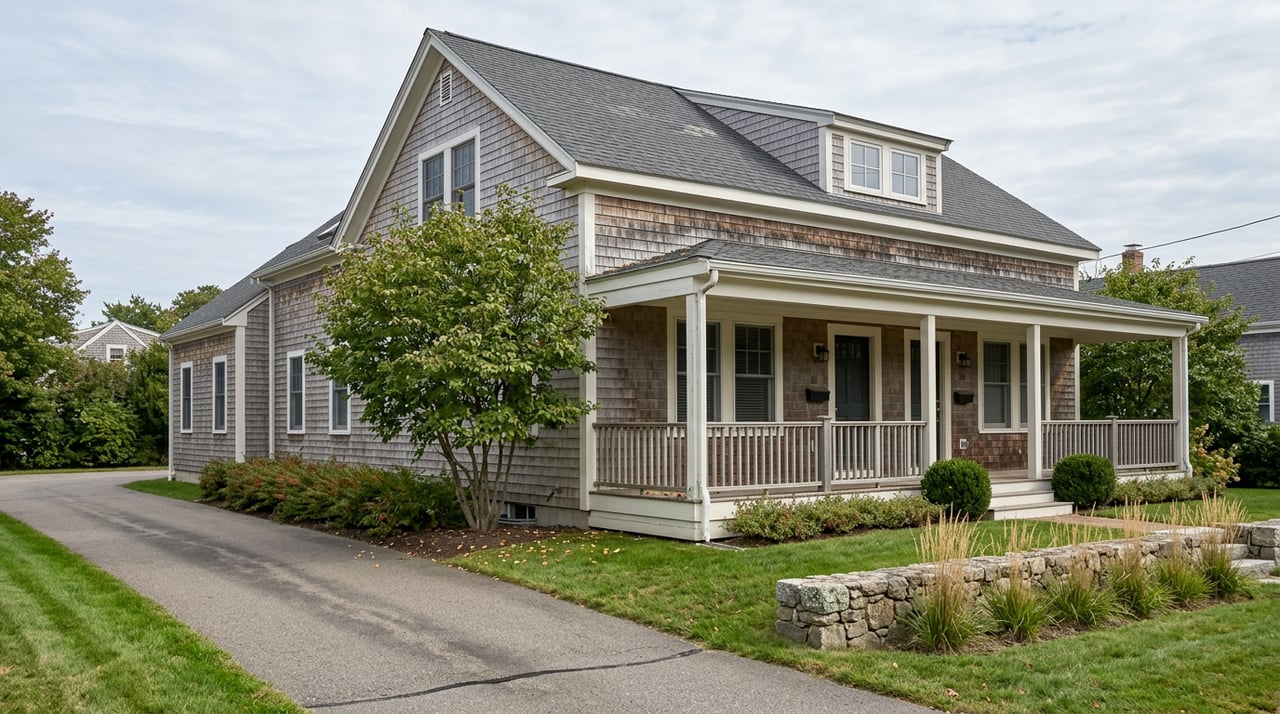
Two condos, same building, same square footage, listed six weeks apart. Both show up in a search as "existing vacation rental income" properties. Both have current bookings on the calendar. A buyer touring the first one assumes the license comes with the deed, the same way the water heater and the parking space do. It doesn't. In Traverse City, a Vacation Home Rental license belongs to the person who applied for it, not to the address, and that distinction has quietly cost more than one buyer a season of rental income they'd already built into their offer.
This isn't a technicality buried in a title report. It's the first thing worth understanding if you're looking at a licensed short-term rental anywhere inside city limits, because the license, the zoning district it sits in, and the rules governing both are all in motion right now.
The License Follows the Owner, Not the Address
Under Chapter 870 of the Traverse City Code of Ordinances, only an owner can hold a Vacation Home Rental license. When the property sells, the license doesn't automatically follow. A transfer to the new owner is possible if the license is in good standing and the paperwork is completed within 90 days of closing, but that's a process you initiate with the City Clerk's office, not a formality that happens in the background while you're signing other documents.
That 90-day clock matters more than it sounds like it should. If a buyer closes assuming the license transfers and doesn't follow up, they can end up owning a property that's zoned correctly for a Vacation Home Rental but has no active license attached to it, which means no legal short-term bookings until a new application clears. The city's own application page lists the mechanics: a $200 application fee, a $200 annual renewal, and an expiration date of December 31 every year regardless of when the license was issued. Renewals can only be processed in the 90-to-30-day window before that date, which means a license that lapses in the gap between a fall closing and a January renewal deadline can leave a new owner scrambling.
Why the Zoning District Matters More Than the Listing Photos
A Vacation Home Rental is only a legal use in a specific set of districts: Hotel Resort, the four Center commercial districts (C-1 through C-4), the city's Development districts (D-1 through D-3), the Grand Traverse Commons district, Industrial, and Transportation. Most single-family residential zoning does not allow one at all. What residential zones do allow is a Tourist Home, a hosted arrangement where the owner has to be present during the stay, which is a fundamentally different business than an unhosted whole-home rental.
This is where a buyer's assumption and the actual zoning map can drift apart. A charming cottage a few blocks off Eighth Street might look identical to one a few blocks over, but if one sits in a C-2 district and the other sits in an R-1 district, only one of them can legally operate as a whole-home rental without an owner on site. The zoning district, not the listing description, decides what income a property can produce.
Even inside the districts where Vacation Home Rentals are allowed, most are capped at 25 percent of a building's units in the C-1, C-2, and D-2 districts, a limit that began with C-1 and C-2 in 2020 and was later extended to D-2. Several other districts, including C-3, C-4, D-1, D-3, the Grand Traverse Commons district, Hotel Resort, and Industrial, have allowed vacation rentals without a unit-percentage limit, which is part of why the proposal now under review treats each district on its own terms instead of applying one rule citywide.
The Cap That's Still Being Written
The 25 percent framework isn't settled policy. It's a live discussion the Planning Commission has carried through multiple meetings since at least 2024, and the direction has been consistent: fewer licenses, not more. Commission chairwoman Debbie Hershey summarized the board's position during one of those sessions:
"We want a reduction in short-term rentals, whether it's a cap or percentages."
As of a June 2026 update to that discussion, the proposal on the table would hold the 25 percent threshold steady in C-1, C-2, and D-2, keep the Hotel Resort district at its current unrestricted allowance, and cut the Industrial district's allowance from unlimited down to zero while trimming three Development districts toward the 25 percent line. None of it has been formally adopted by the city commission as of this writing, which means a property that qualifies for a license today under the existing rules could be sitting in a district that gets tightened before a closing happens, or shortly after.
For a buyer, that timing risk is worth pricing into an offer the same way you'd price a roof that's nearing the end of its warranty. A licensed unit in a district facing a proposed cap isn't necessarily in danger of losing its existing license through grandfathering protections, but new licenses in that district could become harder to get, which affects resale value for the next owner down the line.
How the Rules Reset the Moment You Cross a Township Line
Traverse City's system is only one of several operating within a few miles of each other, and none of them match.
| Jurisdiction | Rule |
|---|---|
| City of Traverse City | Whole-home rentals capped at 25% of units in several commercial and development districts; no citywide cap |
| Peninsula Township | Short-term rentals not permitted |
| East Bay Township | Licenses capped since July 2023, with no new license allowed within 1,000 feet of an existing one |
| Acme Township | Tourist home permits limited to 50 issued per year |
A property just across a township boundary from a city-zoned parcel can face an entirely different set of rules, and the boundary itself often isn't visible from the curb. Acme Township's cap, for instance, is spelled out in its own short-term rental ordinance, a document worth reading in full if a property you're considering sits inside township lines rather than the city. If you're comparing a Traverse City listing against something in a neighboring township for rental potential, the zoning and licensing framework, not the view or the drive to downtown, is often the bigger factor in what that property can actually earn.
The HOA Can Still Say No
Even a property in a compliant zoning district with a valid, transferable license isn't automatically clear to rent. Michigan's Supreme Court ruled in 2025 that homeowners associations can enforce deed restrictions prohibiting short-term rentals, regardless of what the underlying municipal zoning allows. A condo association or a platted neighborhood with restrictive covenants can block short-term rentals outright, even inside a district where the city itself has no objection. Before writing an offer on a licensed unit, it's worth reading the association bylaws as carefully as the zoning map, because either one can end the plan on its own.
Before You Write an Offer
A few questions are worth answering before you make an offer on a property marketed with existing short-term rental income:
- Confirm the license is currently active and in good standing with the City Clerk's office, not just listed as licensed in the marketing materials.
- Ask in writing whether the seller will cooperate with a transfer application inside the 90-day window, and build that timeline into your closing schedule.
- Pull the zoning district and check it against the current list of districts where Vacation Home Rentals are allowed.
- Ask whether the property or building is subject to any HOA or condo association covenants that address short-term rentals separately from city zoning.
- Check the license's inspection history. Vacation Home Rentals are inspected before a new license is issued and every three years after that, and a lapsed inspection can delay a renewal.
None of this makes a licensed Traverse City rental a bad investment. It makes it a property whose income potential depends on paperwork and zoning status that has to be verified independently of what the listing says, the same way you'd verify a well and septic system before closing on a home outside city water and sewer.
FAQ
Does a Vacation Home Rental license automatically transfer when I buy the property? No. The license is owner-based under Chapter 870 of the city code. A transfer can be completed if the license is in good standing and the paperwork is filed within 90 days of closing, but it requires action, not assumption.
Can I convert a residential property into a whole-home vacation rental? Generally, no. Whole-home Vacation Home Rentals are limited to specific commercial, development, and hotel resort districts. Most residential zoning only permits a hosted Tourist Home, where the owner is present during the stay.
Is Traverse City about to cap the number of licenses citywide? Not yet, though the direction of discussion has favored reductions. A June 2026 proposal would maintain some existing caps, zero out the Industrial district's allowance, and trim several Development districts, but nothing has been formally adopted at this writing.
Can an HOA block a short-term rental even if the city zoning allows it? Yes. A 2025 Michigan Supreme Court ruling confirmed that HOAs can enforce deed restrictions prohibiting short-term rentals independent of municipal zoning.
If you're weighing a licensed rental against a straightforward primary residence, or trying to figure out what a specific Traverse City address can and can't legally do before you write an offer, that's exactly the kind of groundwork Ryan & Jenni Craig walk clients through before any paperwork gets signed. Schedule your free consultation and let's look at the zoning map together before you fall in love with the listing photos.